Backflow Testing Cost Guide

πŸ“– 10 Minute Read

Introduction

Backflow testing cost depends on the number of devices, property location, municipal reporting requirements, access conditions, device type, and whether any repairs are needed after testing. For most property owners, the best way to understand the price is to look at the service call, the first device, additional devices, and any city or online filing fees.

This guide explains what affects the cost of backflow testing, how pricing is commonly structured, why multi-device properties are priced differently than single-device properties, and what to expect if a backflow preventer fails its annual test. It is written for commercial building owners, strata councils, restaurants, warehouses, industrial facilities, irrigation users, property managers, and homeowners who have received a municipal notice.

What You'll Learn

By the end of this guide you'll understand:
βœ… What is included in backflow testing cost
βœ… Typical pricing structure
βœ… Municipal filing and reporting fees
βœ… Property type pricing considerations
βœ… What happens if a device fails
βœ… How to reduce avoidable costs
βœ… What to send when requesting a quote

Quick Answer

Backflow testing price is usually based on a truck charge or site visit fee, the first backflow device tested, each additional device, municipal or online filing fees, GST, and any repair work if a device fails. A single easy-access device is usually the lowest-cost scenario, while multi-device commercial or strata properties cost more because each assembly must be tested and documented.

What Is Included in Backflow Testing Cost?

Certified backflow testing is more than a quick visit to the property. A proper service visit includes locating the assembly, confirming device information, connecting calibrated test equipment, performing the required test procedure, recording results, identifying whether the assembly passes or fails, and submitting the report where required by the municipality or reporting platform.

A low price that does not include reporting, documentation, or follow-up can create problems later. For annual compliance, the property owner usually needs more than a verbal pass or fail. They need a certified test result that can be submitted properly and kept for records.

πŸ’‘ Common Pricing Structure

Many backflow testing companies price annual testing with a site visit or truck charge, a first-device test price, a lower additional-device price, and any required filing fees.

This structure makes sense because the first device includes travel, setup, paperwork, and site coordination, while additional devices at the same property can often be tested more efficiently during the same visit.

Why the Number of Devices Matters

A backflow preventer is tested as an individual assembly. If a property has three assemblies, each one must be tested and documented. That is why multi-device buildings cost more than single-device properties. The cost difference is not just time on site. Each device may also require its own test record, serial number, location description, pass/fail result, and filing fee.

Device count is especially important for restaurants, strata buildings, commercial plazas, industrial properties, irrigation systems, and properties with separate domestic water, fire protection, and irrigation connections.

What Affects Backflow Testing Price?

Device Count: More devices means more testing time, more records, and often more filing fees.

Property Location: Travel, service area, parking, and municipal reporting rules can affect pricing.

Access: Locked rooms, ceiling spaces, underground vaults, poor lighting, or blocked devices can add time.

Device Condition: Leaking, damaged, frozen, corroded, or seized parts can require repair.

Reporting requirement: Municipal or online filing fees may apply per device.

Urgency: Same-day, after-hours, or deadline-driven work may cost more depending on availability.

Backflow Testing Price by Property Type

Backflow testing cost varies by property type because different properties have different device counts, access conditions, reporting needs, and operational constraints. A single residential irrigation assembly is very different from a restaurant with several devices, or a strata property with domestic, irrigation, and fire protection assemblies.

Commercial buildings often need annual testing for domestic water service, irrigation systems, mechanical equipment, tenant improvements, or fire protection connections. Cost depends on how many assemblies are present and how easily the technician can access them.

Restaurants may have multiple backflow devices serving equipment, mop sinks, chemical dispensers, irrigation, or main water connections. Because food service businesses often have operating hours and busy periods, scheduling can also matter.

Strata properties should budget for annual testing as a recurring compliance expense. Property managers and councils should keep a current device list, previous reports, due dates, and access notes to avoid unnecessary delays.

Irrigation backflow testing may be seasonal. Outdoor devices can be affected by freezing, debris, landscaping, enclosures, or poor access. If the device was not winterized or has visible damage, repair costs may be separate from the test.

Fire protection backflow assemblies may require additional coordination because they are connected to life safety infrastructure. Testing should be scheduled carefully and documented properly.
What Happens if a Backflow Device Fails?

A failed backflow test does not automatically mean the entire device must be replaced. Many assemblies can be repaired with manufacturer-approved parts, cleaned, adjusted, or rebuilt. However, repair cost is separate from the routine testing cost because it depends on the failure cause, parts required, device size, and labour time.

πŸ’‘ How to Reduce Avoidable Costs

Property owners cannot avoid legitimate testing or reporting requirements, but they can reduce avoidable costs by keeping the device accessible, booking before the deadline, and maintaining clear records.
πŸ“Œ Keep mechanical rooms unlocked or arrange access before the appointment.
πŸ“Œ Remove storage, boxes, or obstructions around the device.
πŸ“Œ Know how many devices are on site before requesting a quote.
πŸ“Œ Provide previous reports if available.
πŸ“Œ Schedule before the municipal due date instead of waiting until the last week.
πŸ“Œ Protect outdoor devices from freezing, weather, and damage.

πŸ’‘ What to Send When Requesting a Quote

A clear quote request helps the testing company provide accurate pricing. If you only say that you need backflow testing, the company may still need to ask follow-up questions. Sending the right information up front can make booking faster.
πŸ“Œ Property address and city.
πŸ“Œ Number of backflow devices, if known.
πŸ“Œ Municipal notice or due date, if you received one.
πŸ“Œ Photos of each device, if available.
πŸ“Œ Access instructions such as lockbox, suite number, mechanical room, or property manager contact.
πŸ“Œ Whether the property is commercial, strata, restaurant, irrigation, industrial, or residential.

Need a Fast Quote?

To help us provide accurate pricing, send your property address, city, number of backflow preventers, and a photo or copy of your municipal notice if available. Most enquiries receive a response within 30 minutes during business hours.

Learning Hub

Related Learning Hub Articles

πŸ“Œ What Is a Backflow Preventer?
πŸ“Œ What Happens During a Backflow Test?
πŸ“Œ Backflow Preventer Repair Guide
πŸ“Œ Backflow Preventer Installation Guide
πŸ“Œ Cross Connection Control Explained
πŸ“Œ Backflow Testing Requirements in British Columbia

How much does backflow testing cost?
Why does the first device cost more than additional devices?
Are municipal filing fees included?
Does the price include GST?
What happens if my backflow preventer fails?
Do restaurants cost more?
Do strata buildings get a better price per device?
Can I get a quote from a photo?
Is backflow testing required every year?
Does testing include repairs?
Why is access important for pricing?
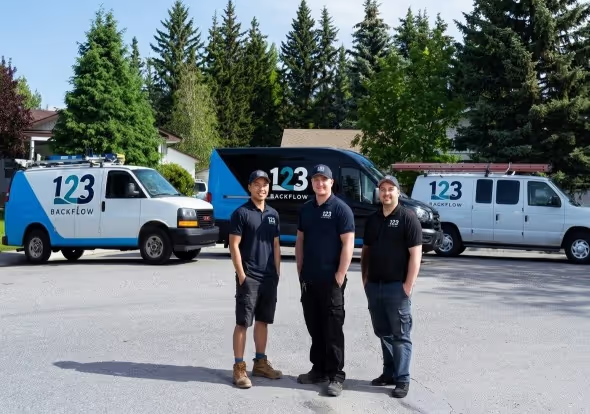
Three men in black company shirts standing in a parking lot with three white and blue vans labeled '123 BACKFLOW' in the background.
Book today and stay compliant.

Received a Backflow Testing Notice?

Portrait of a man with short black hair, smiling slightly against a dark blue background.

Have questions about annual testing, city notices, repairs, or installations? Contact Joseph directly for fast, knowledgeable assistance.