Backflow Preventer Installation Guide

πŸ“– 15 Minute Read

Introduction

Backflow preventer installation is an important part of protecting drinking water and keeping a property compliant with local cross connection control requirements. Whether the installation is for a commercial building, restaurant, strata property, irrigation system, fire protection system, medical office, warehouse, or agricultural site, the goal is the same: install the correct approved assembly in the correct location so it can protect the potable water supply and be tested properly.

This guide explains when a backflow preventer may be required, how installers choose the right type of assembly, what to consider before installation, where devices are commonly installed, and why testing and documentation after installation matter. It is written for property owners, strata councils, facility managers, business owners, contractors, and anyone who has received a municipal notice requiring backflow protection.

What You'll Learn

By the end of this guide you'll understand:
βœ… What installation means and when it is needed
βœ… Why backflow preventers are installed
βœ… Common situations that require installation
βœ… Choosing the right type of device
βœ… Installation location, clearance, and accessibility
βœ… Permits, municipal requirements, and coordination
βœ… Step-by-step installation process
βœ… Testing, certification, and reporting after installation
βœ… Cost considerations
βœ… How to prepare for your annual test
βœ… Frequently asked questions from property owners

Quick Answer

Backflow preventer installation means adding an approved backflow prevention assembly to a plumbing system so contaminated or non-potable water cannot flow backward into the drinking water supply. The correct device depends on the hazard level, plumbing application, municipal requirements, installation location, access, drainage, and testing needs.

What Is Backflow Preventer Installation?

Backflow preventer installation is the process of selecting, installing, testing, and documenting a device that protects the potable water supply from reverse flow. The assembly is installed at a point where a cross connection or potential contamination hazard exists. In many cases, it is installed on a domestic water service, irrigation supply, fire protection line, boiler feed, commercial process line, or other plumbing connection that could create backflow risk.

The work is not simply about cutting in a valve. A proper installation considers the application, hazard classification, device type, pipe size, water demand, manufacturer requirements, municipal requirements, access for annual testing, drainage, freeze protection, shutoff valves, and long-term serviceability. A device that is technically installed but impossible to test or maintain can create future compliance problems.

Why Are Backflow Preventers Installed?

Backflow preventers are installed to stop non-potable water from reversing into a clean drinking water system. Backflow can occur because of backsiphonage, where a drop in supply pressure pulls water backward, or backpressure, where pressure from equipment or a downstream system pushes water back toward the potable supply.

Municipal cross connection control programs use backflow prevention to reduce the risk of contamination. Depending on the property and application, a backflow preventer may protect against fertilizers, cleaning chemicals, boiler water, stagnant water, process fluids, fire protection water, irrigation water, or other contaminants.

When Is a Backflow Preventer Required?

A backflow preventer may be required when a property has a cross connection or a plumbing application that could contaminate the potable water supply. Some properties receive a direct notice from the municipality. Others require installation during construction, renovation, tenant improvement work, irrigation upgrades, fire system work, or a change in building use.

Commercial Tenant Improvement: New fixtures, equipment or water-using processes can create cross connection risk.
Irrigation System: Irrigation lines can contain soil, fertilizer, stagnant water or outdoor contaminants.
Fire Protection System: Fire sprinkler piping may contain stagnant water or additivies depending on system design.
Restaurant or Food Service: Commercial equipment, chemical dispensers and food prep areas may require protection.
Industrial Process: Process fluids, tanks, pumps or pressure equipment may create back pressure risk.
Municipal Notice: The city has identified a required assembly or reporting oobligation.

Common Property Types That Need Installation

Backflow prevention assemblies are common in commercial, industrial, institutional, agricultural, irrigation, and multi-family settings. The exact requirement depends on local rules and the specific plumbing arrangement, but several property types are especially likely to need backflow protection.
πŸ“Œ Commercial office buildings with domestic water services.
πŸ“Œ Restaurants and food service with specialized equipment or chemical connections.
πŸ“Œ Warehouses and distribution centre with process water or hose connections.
πŸ“Œ Strata corporations and multi-family residential buildings with shared water systems.
πŸ“Œ Medical and healthcare facilities with equipment and treatment rooms.
πŸ“Œ Schools, hotels, retail plazas, and mixed-use developments with multiple user groups.
πŸ“Œ Irrigation systems, landscaped properties, and agricultural properties.
πŸ“Œ Fire protection systems that require a testable assembly or detector assembly.

Choosing the Right Backflow Preventer

Choosing the right backflow preventer is one of the most important parts of the installation. A device should not be selected only by price or pipe size.

The correct assembly depends on the hazard level, whether the risk is backsiphonage or backpressure, whether the system is subject to continuous pressure, whether water discharge is acceptable, and whether the device will be accessible for testing and repair.

Reduced Pressure Backflow Assembly (RPBA): Higher hazard application where stronger protection is required.

Double Check Valve Assembly (DCVA): Lower hazard applications where local rules allow it.

Pressure Vacuum Breaker (PVB): Common on irrigation systems where back-siphonage protection is needed.

Air Gap: Physical separation used in some high risk applications.

Installation Location Matters

A backflow preventer should be installed where it can protect the system, remain accessible, and be tested without unnecessary difficulty. Poor location choices can create future service problems even if the device itself is the correct model. Tight ceilings, cramped walls, underground vaults, weather-exposed areas, or locations without drainage can make testing and repair more difficult.

A good installation plan considers clearance around the device, safe access for a tester, protection from freezing or physical damage, adequate drainage where relief discharge is possible, and enough space to replace parts in the future.

Before Installation: Key Planning Questions

Before installing a backflow preventer, the installer and property owner should understand the purpose of the device, the affected water line, the required assembly type, and the operational impact of shutting down water. For commercial and strata properties, scheduling matters because installation may temporarily interrupt water service.

How Backflow Preventer Installation Works

A professional backflow installation should follow a clear process from assessment to final testing. The work may look simple from the outside, but the installation must account for device selection, pipe configuration, isolation valves, drainage, access, shutdown coordination, and reporting. The best installations are easy to test, easy to service, and built with future compliance in mind.

Step-by-Step Installation Process

1. Β  Β  Review the municipal notice, drawings, site conditions, or reason for installation.
2. Β  Β  Identify the water line, pipe size, system served, and likely hazard level.
3. Β  Β  Select the appropriate approved backflow prevention assembly for the application.
4. Β  Β  Confirm access, clearance, drainage, freeze protection, and shutoff requirements.
5. Β  Β  Coordinate water shutdown timing with the property owner, tenants, or facility team.
6. Β  Β  Install the assembly in the correct orientation with appropriate fittings and supports.
7. Β  Β  Restore water service and check for visible leaks or operational issues.
8. Β  Β  Perform certified testing after installation using calibrated test equipment.
9. Β  Β  Submit the passing test report to the municipality or reporting system where required.
10. Β Provide the property owner with documentation for future annual testing records.

πŸ’‘ Water Shutdown and Scheduling

Most installations require a planned water shutdown because the device must be cut into the existing piping system. For homes or small irrigation systems, this may be straightforward. For commercial buildings, restaurants, strata properties, warehouses, healthcare sites, and fire protection systems, scheduling may require more coordination.

If the installation affects tenants, customers, residents, production, food service, medical operations, or fire protection, the owner should communicate the expected shutdown window in advance. A well-planned installation reduces disruption and avoids surprises.

Testing After Installation

A newly installed testable backflow prevention assembly should be tested after installation. Testing confirms the device operates correctly in its installed condition. This step is important because the installation is not just about placing a device on the pipe; the assembly must function properly after the work is complete.

If the assembly passes, the certified tester can complete the report and submit it to the municipality or online reporting system where required. Keeping this first passing report is important because it becomes the starting record for future annual testing.

Municipal Reporting and Documentation

Many municipalities require backflow assembly test reports to be submitted after installation and then annually afterward. Some use online reporting platforms, while others may use city forms or specific submission processes. Property owners should keep copies of reports, invoices, photos, device information, and any municipal correspondence.

Passing installation test report, location description or photo, invoice or work summary and municipal submission confirmation. Most importantly the assembly make, model, size and serial number helps.

How Much Does Backflow Preventer Installation Cost?

Backflow preventer installation cost depends on the type and size of assembly, pipe material, access, location, water shutdown complexity, drainage needs, permits, parts, labour time, and whether additional piping modifications are required. A small irrigation assembly is different from a larger commercial, industrial, or fire protection installation.

Common cost factors are:
πŸ“Œ Device type and size
πŸ“Œ Pipe material and condition
πŸ“Œ Access and clearance
πŸ“Œ Drainage requirements
πŸ“Œ Water shutdown coordination
πŸ“Œ Testing and reporting

Common Installation Mistakes to Avoid

Many installation problems are not obvious until the device needs annual testing or repair. A device may be installed in a way that looks neat but still creates practical issues if there is not enough access, clearance, drainage, or protection from weather.
πŸ“Œ Installing the wrong type of device for the hazard or application.
πŸ“Œ Placing the assembly where it cannot be tested or repaired easily.
πŸ“Œ Ignoring relief valve drainage needs for reduced pressure assemblies.
πŸ“Œ Installing outdoor devices without adequate freeze or impact protection.
πŸ“Œ Failing to coordinate water shutdowns for commercial or strata properties.
πŸ“Œ Forgetting that installation should be followed by certified testing and reporting.
πŸ“Œ Leaving the property owner without clear device location and documentation.

Maintenance After Installation

Once a backflow preventer is installed, the property owner is usually responsible for keeping it accessible and arranging required testing. A new installation should be treated as the start of an ongoing compliance routine, not a one-time task that can be forgotten.
πŸ“Œ Keep the assembly accessible and do not block it with storage.
πŸ“Œ Protect outdoor devices from freezing, impact, vandalism, and weather.
πŸ“Œ Watch for visible leaks, corrosion, missing caps, or discharge.
πŸ“Œ Keep installation and test records in one place.
πŸ“Œ Schedule annual testing before the municipal due date.
πŸ“Œ Repair failed assemblies promptly and re-test after repair.

πŸ’‘ Common Cost Factors

Number of Devices: Each assembly must be tested and documented.

Municipality: Some municipalities have separate reporting fees or portal requirements.

Accessibility: Hard to access devices may require additional time.

Repairs: Failed devices may require parts, labour, and re-testing.

Device Size and Type: Larger or more complex assemblies can take longer to test.

Property-Type Considerations

Commercial buildings may require installation on domestic water services, tenant equipment, irrigation systems, mechanical equipment, or other connections. The installation should be planned around business operations and future annual testing access.

Restaurants may have equipment and chemical connections that create cross connection concerns. Installation planning should minimize water interruption during food service hours and support future inspection requirements.

Strata councils and property managers should document where the device is installed, what it protects, when it was tested, and when the next annual test is due.

Irrigation installations often need careful placement, elevation, drainage, and freeze protection. Seasonal startup and winterization can affect long-term performance.
‍
Fire protection installations require careful coordination because they connect to life safety infrastructure. Follow the required impairment, testing, and documentation process for the site.

Need a Fast Quote?

To help us provide accurate pricing, send your property address, city, number of backflow preventers, and a photo or copy of your municipal notice if available. Most enquiries receive a response within 30 minutes during business hours.

Learning Hub

Related Learning Hub Articles

πŸ“Œ What Is a Backflow Preventer?
πŸ“Œ What Happens During a Backflow Test?
πŸ“Œ Backflow Preventer Repair Guide
πŸ“Œ Backflow Testing Cost Guide
πŸ“Œ Cross Connection Control Explained
πŸ“Œ Backflow Testing Requirements in British Columbia

Do I need a backflow preventer installed?
Who can install a backflow preventer?
Does a new device need to be tested?
Can I choose the cheapest device?
Where should the device be installed?
Can a backflow preventer be installed outside?
Will installation shut off my water?
Do restaurants need backflow preventers?
Do irrigation systems need backflow preventers?
How long does installation take?
Does 123 Backflow handle installation and reporting?
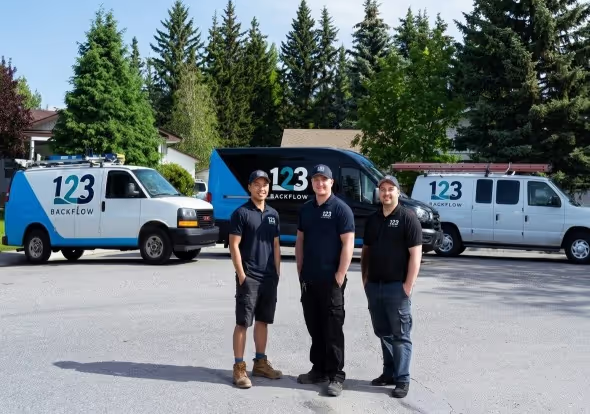
Three men in black company shirts standing in a parking lot with three white and blue vans labeled '123 BACKFLOW' in the background.
Book today and stay compliant.

Received a Backflow Testing Notice?

Portrait of a man with short black hair, smiling slightly against a dark blue background.

Have questions about annual testing, city notices, repairs, or installations? Contact Joseph directly for fast, knowledgeable assistance.