What Is Backflow Testing?

The Complete Guide for British Columbia Property Owners

Every day, thousands of people in British Columbia turn on their taps without thinking about what keeps their drinking water safe. Behind the scenes, one of the most important safety devices in any plumbing system is the backflow preventer.

Whether you own a commercial building, manage a strata property, operate a restaurant, or maintain an irrigation system, your backflow preventer plays a critical role in protecting the public water supply from contamination.

Like any mechanical device, however, a backflow preventer can wear over time. Springs weaken, rubber components deteriorate, check valves become fouled with debris, and internal seals can fail. A device that appears perfectly normal from the outside may no longer provide the level of protection it was designed for.

That's why municipalities across British Columbia require many backflow preventers to be tested on a regular basis by a certified tester.

This guide explains everything you need to know about backflow testing, including:
‣ What backflow is
‣ Why backflow testing is required
‣ How testing works
‣ Who needs annual testing
‣ What happens if your device fails
‣ Typical costs
‣ Municipal compliance requirements
‣ Frequently asked questions

Whether you're a homeowner, business owner, property manager, or facility manager, this guide will help you understand how backflow testing protects your property and the community's drinking water.
Quick Answer

What is Backflow Testing?
Backflow testing is the certified inspection of a backflow preventer to verify that it is functioning correctly and protecting the potable water supply from contamination. During the test, a certified technician uses calibrated differential pressure gauges to evaluate the internal check valves and relief valve (where applicable) without dismantling the assembly.If the device passes, the results are documented and submitted to the appropriate municipal cross-connection control program where required. If it fails, repairs or replacement may be necessary before the device can be certified as compliant.

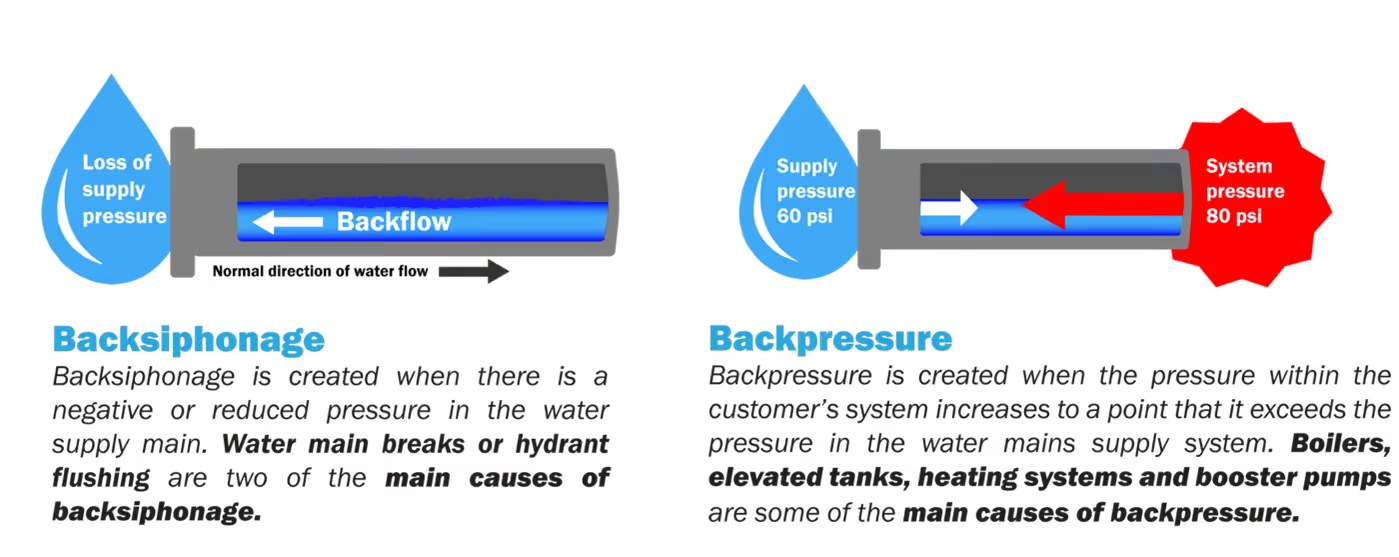
Diagram comparing backsiphonage and backpressure in water systems: backsiphonage shows water flowing backward due to loss of supply pressure; backpressure shows water pushed back by higher system pressure than supply pressure.

Protecting Abbotsford's Drinking Water Systems

Our Abbotsford Services
‣ Certified backflow testing
‣ Repairs for failed assemblies
‣ Installations for new or upgraded systems
‣ Accurate report submission

Common Issues We Help Prevent
‣ Overdue testing notices
‣ Failed inspections requiring re-tests
‣ Incorrect or incomplete reports

Why Choose 123 Backflow
‣ Experienced with commercial, agricultural, irrigation, strata, and industrial systems.
‣ Certified and insured
‣ Quick turnaround times
‣ Full repair support

Simple, efficient, and handled for you from start to finish. Book your Abbotsford backflow test today and avoid compliance issues.

How much is the Abbotsford backflow reporting fee?
Do I need to submit annual backflow test report to the City of Abbotsford?
What types of properties do you service in Abbotsford?
What happens if my backflow preventer fails the test?
Can you test multiple backflow preventers at the same Abbotsford property?
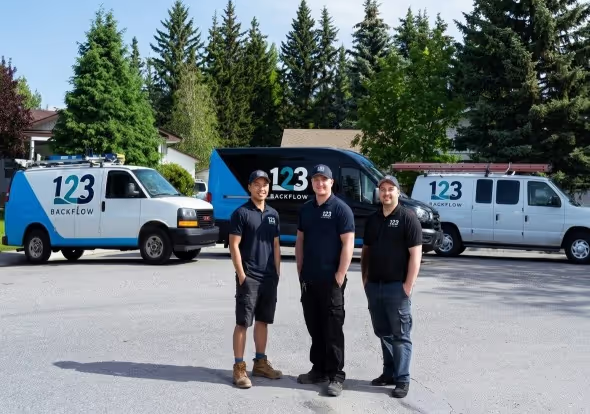
Three men in black company shirts standing in a parking lot with three white and blue vans labeled '123 BACKFLOW' in the background.
Book today and stay compliant.

Received a Backflow Testing Notice?

Portrait of a man with short black hair, smiling slightly against a dark blue background.

Have questions about backflow testing, city notices, repairs, or report submission? Contact Joseph at 123 Backflow.